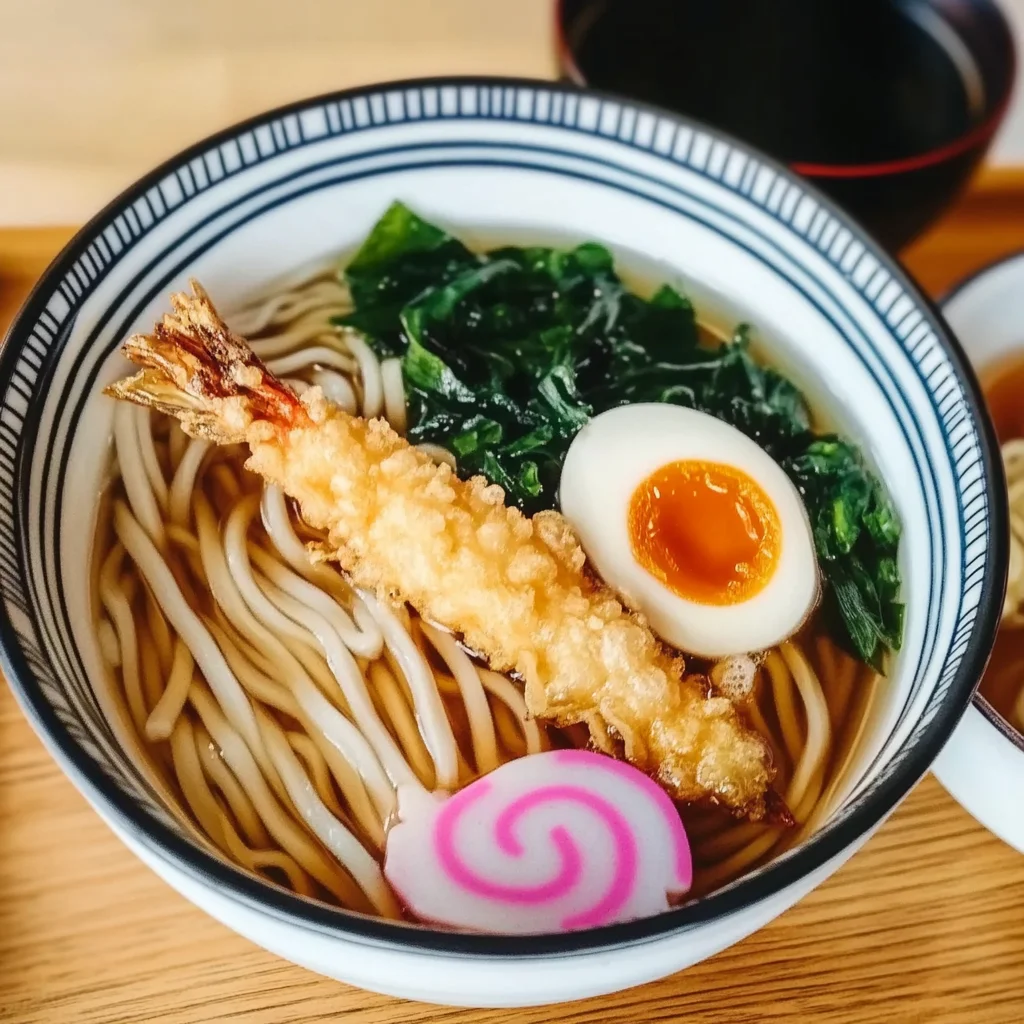
Ingredients
Equipment
Method
- Step 1: Start by preparing your broth. Heat dashi or your soy sauce-based liquid in a pot over medium heat.
- Step 2: While the broth is warming, cook the soba noodles according to the package instructions, usually boiling for about 4-5 minutes. Once they're done, drain and rinse them under cold water to stop the cooking process.
- Step 3: In a separate pot, cook the udon noodles by following the package directions, typically boiling for 5-8 minutes. Once cooked, drain and set aside.
- Step 4: In a large pan, sauté your choice of vegetables and protein in a drizzle of sesame oil until everything is cooked through and fragrant.
- Step 5: Add either the cooked soba or udon noodles to the pan with the sautéed ingredients. It's fun to mix and match here!
- Step 6: Pour your prepared broth over the noodles and gently stir to combine all the flavors.
- Step 7: Season to taste with mirin and soy sauce, adjusting to your preference.
- Step 8: Serve hot, garnished with additional green onions or sesame seeds if you'd like a little extra flair.
Notes
For a gluten-free option, use rice noodles instead of soba or udon. Store any leftover noodles and broth separately in airtight containers in the fridge for up to 3 days.